
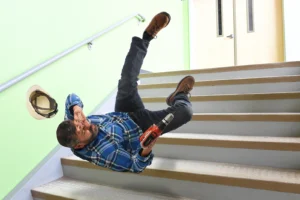
A fall on a staircase can happen in seconds—but the effects can last a lifetime. Whether it’s a broken step, missing handrail, or poor lighting, unsafe stairs can cause real harm. At Butler Kahn, we take these cases seriously because we’ve seen what they do to people and families. When someone gets hurt because of someone else’s carelessness, it’s not just an accident—it’s a failure that should’ve been prevented. We don’t back down from property owners or insurance companies, and we’re not afraid to take a case to trial when that’s what it takes. In this piece, Butler Kahn explains important information about stairway injury claims, including the legal options available to victims, the possible types of financial compensation that can be received, and how an Atlanta stairway accident lawyer can fight on the victim’s behalf to obtain justice and maximum compensation.
Common Types of Stairway Accidents
Wet or Slippery Steps — Falls often happen when stairs are slick from water, cleaning fluids, or food spills. These accidents are common in apartment buildings, grocery stores, and hospitals where maintenance is slow or warning signs are missing.
Uneven or Broken Steps — You’re more likely to trip when a step is cracked, too narrow, or taller than the others. Staircases that don’t follow Georgia building code can be extremely dangerous, especially in older apartments or back stairwells.
Loose or Missing Handrails — Handrails are a key safety feature, and when they’re loose, shaky, or gone completely, it’s easy to fall—especially for kids, older adults, or anyone carrying something.
Poor Lighting in Stairwells — It’s hard to stay safe on stairs you can’t see. Dim bulbs, broken lights, or no lighting at all can lead to serious stairway accidents. These types of falls happen a lot in parking garages, apartment buildings, and hotels.
Rotted or Collapsing Stair Structures — A stair that caves in, shifts, or breaks under your feet is a serious hazard. This usually means long-term neglect—rotting wood, rusted screws, or water damage left unfixed.
Escalator Accidents and Moving Stairs — Escalators may not look like regular stairs, but Georgia treats them similarly when it comes to safety. If an escalator suddenly jerks, stops, or malfunctions due to poor maintenance, the consequences could be catastrophic. These accidents often happen in shopping malls, airports, and train stations.
Severe Injuries You Can Get From an Atlanta Staircase Accident
Broken Bones — It’s common to suffer fractures in your wrist, arm, ankle, or hip when you hit the ground or try to break your fall. Older adults are especially vulnerable to hip fractures, which often lead to surgery or long recovery times.
Spinal Cord Injuries — If your back or neck takes the impact, you could experience nerve damage, herniated discs, or even paralysis in extreme cases. These injuries may not show symptoms right away but can worsen over time.
Head and Brain Injuries — Falls on stairs can cause you to strike your head, leading to a concussion or traumatic brain injury. Even a mild TBI can affect your memory, speech, or mood, and sometimes symptoms are delayed.
Torn Ligaments and Muscle Damage — A sudden twist or awkward landing can stretch or tear soft tissue. You might feel sharp pain in your knees, shoulders, or ankles, and these injuries can take longer to heal than broken bones.
Facial Injuries — If your face hits a step, railing, or wall, you could suffer broken teeth, a broken nose, or cuts that require stitches or surgery. This kind of trauma may also leave scarring or cause long-term dental issues.
Where Stairway Accidents Happen in Atlanta
Apartment Complexes — You’re more likely to get hurt on stairs in older or poorly maintained apartment buildings, especially in neighborhoods like Midtown, Buckhead, and East Point. These stairs may have weak handrails, broken steps, or lighting issues that go unfixed for too long.
MARTA Stations and Public Transit Areas — Busy train stations like Five Points or Peachtree Center have lots of foot traffic, and their stairways—whether traditional or escalator—are common places for trips and falls, especially when they’re wet or poorly lit.
Downtown Office Buildings — Staircases in commercial properties around Peachtree Street or near Georgia State often go overlooked, particularly in emergency stairwells. If lights are out or handrails are loose, it can become dangerous quickly.
Shopping Centers and Malls — Stairways in places like Lenox Square, Atlantic Station, and Perimeter Mall see heavy use. Escalators and stairs in retail areas are frequent spots for accidents, especially near entrances where floors are slick.
Parking Garages and Decks — Stairwells in parking structures—whether at the airport, a hospital like Grady, or downtown event venues—are often dimly lit and exposed to the elements. Rainwater, poor lighting, or worn-down steps are all hazards.
Hotels and Event Spaces — Large venues like the Georgia World Congress Center or State Farm Arena often have stairwells tucked behind the scenes. When they’re neglected or not clearly marked, they can lead to serious falls.
Who’s at Fault for Your Stairway Accident in Georgia
Property Owners and Landlords — Under Georgia Code § 51-3-1, if someone owns or rents out a space and invites you onto that property, they have a duty to keep the stairs safe. That means fixing hazards they know about or should’ve known about. If they don’t, and you get hurt, they may be held responsible.
Maintenance and Janitorial Companies — Some property owners hire outside companies to keep stairways clean and safe. If a company fails to salt icy steps, repair a broken light, or clean up spills properly, the company could be at fault depending on their contract and role.
Contractors, Architects, or Builders — When stairs are poorly built or don’t follow Georgia’s construction codes, the people who designed or installed them might share the blame. These cases may require a closer look at inspection records and who signed off on the work.
Businesses That Rent the Space — If a store or restaurant rents property but controls the stair area—for example, a back stairwell used by employees or customers—they could be liable under Georgia Code § 51-3-1 if they fail to address a known danger.
Government Entities — If your accident happened on a public stairway, like one at a city-owned building or a MARTA station, special rules apply. You have to send an ante litem notice within a short time—usually six months—under Georgia Code § 36-33-5.
Questions Victims Have After Falling Down Stairs in Georgia
What should I do right after falling down the stairs?
Get medical help and take photos of the steps if possible. Whether it’s a stairwell in a store or an apartment, documenting the scene early can help prove what caused your injury later on.
Can I sue my landlord for a stairwell injury?
Yes, if your landlord ignored a broken step, poor lighting, or another hazard, you might have a case under Georgia Code § 51-3-1. You’ll need to show that they knew about the issue—or should have known—and didn’t fix it.
How much is a staircase injury case worth?
The value depends on your medical bills, time missed from work, and how badly the fall affected your life. Every case is different, so it helps to talk to a lawyer who’s handled injuries from unsafe steps before.
Should I get a staircase fall lawyer if I slipped on the stairs?
If your injuries are serious or the owner denies fault, yes. These aren’t basic claims—falls on stairs often involve building code issues, video footage, or expert inspections. A lawyer can help you prove what really went wrong.
What’s the deadline to sue for a fall in a stairwell in Georgia?
You usually have two years from the fall date to file a lawsuit under Georgia Code § 9-3-33. But if you fell on government-owned property, you may only have six months to send a legal notice under special rules.
Can falling on stairs cause a brain injury?
Yes, hitting your head on concrete or steel steps can lead to a concussion or worse. Symptoms of a brain injury might show up right away—or not for days. Always see a doctor, even if you think it was just a bump.
What if I was partly to blame for tripping on the steps?
Georgia’s law on shared fault (Georgia Code § 51-12-33) still lets you recover damages if you were less than 50% responsible. Your compensation is reduced based on your share of the blame for the stair-related fall.
Can I sue the city if I got hurt in a public stairwell?
You can—but you must send an ante litem notice within six months (Georgia Code § 36-33-5). Whether it was a city building or a MARTA station, missing this deadline could stop your case before it starts.
How long does a case take if I fell on someone else’s stairs?
Some settle in months, but others—especially ones with serious injuries or denied fault—can take a year or longer. A lawyer who pushes for evidence early can often help your case move faster and avoid unnecessary delays.
What makes a stair fall case different from other injuries?
It’s not just that you got hurt—it’s where and how. Lawyers handling stair injuries know how to prove building code violations, lighting failures, or structural defects. That kind of detail can make or break your claim.
Atlanta Stairway Injury Attorney
If you or someone you love was hurt falling on a defective or unsafe staircase, you don’t have to deal with it alone. The experienced Atlanta premises lability attorneys at Butler Kahn handle serious stair-related injury cases with the focus and determination they deserve. Property owners, landlords, and big insurance companies often try to avoid responsibility—but we don’t let them off the hook. We dig into the details, uncover the truth, and fight for what’s right. If you’re dealing with medical bills, missed work, or just want to understand your legal rights, we’re ready to listen. Contact a stairway accident attorney Butler Kahn by calling (678) 940-1444 or contacting us online for a free consultation.
Warning: Undefined array key 0 in /home/staging_butler/www/wp-content/themes/cws-theme-work-mix/partials/standard-page.php on line 31